Memaparkan catatan dengan label Fiqh Perubatan. Papar semua catatan

Rabu, 9 September 2009

Tak Batal Puasapun....

Assalamualaikum.

Keputusan Seminar Feqh Perubatan ke 9, yang diadakan di Casablanca, Maghribi pada 8-11 Safar 1418, bersamaan 14-17 Jun 1997 :

(Anjuran Institut Kajian Sains dan Perubatan Sultan Hassan II dengan kerjasama Akademi Fiqh Islam serta WHO -World Health Organization)

Ahli majlis/peserta seminar tersebut telah sepakat bersetuju bahawa perkara-perkara berikut TIDAK MEMBATALKAN PUASA.

1. Ubat titis mata, titis telinga dan basuh telinga

2. Ubat tablet bawah lidah yang digunakan oleh pesakit Angina (Jantung). [contoh: Sublingual Gliceryl Trinitrate]

3. Memasukkan ubat melalui faraj, memasukkan alat perubatan, membasuh, memasukkan spekulum dan jari doktor atau bidan semasa pemeriksaan vagina (sebelum bersalin) [contoh: vaginal examination, speculum examination, cervagem]

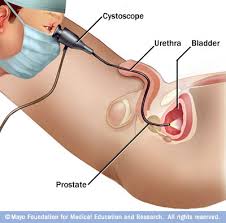
4. Memasukkan teropong ke salur kencing lelaki atau perempuan untuk penyediaan x-ray. [contoh: cystoscopy]

5. Menampal, mencabut, mengorek dan mencuci gigi atau menggunakan alatan dan berus gigi, dengan syarat TIADA apa-apa bahan yang memasuki perut dari prosedur tersebut. [contoh: Dental procedure]

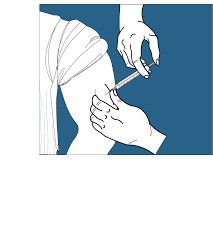
6. Suntikan melalui kulit, otot, sendi atau pembuluh darah, KECUALI memberi makanan melalui pembuluh darah. [makanan i.e Total Parenteral Nutrition regime. Not sure about IV drips, vitamins, glucose, but if needed for therapeutic purposes, then it is Harus]

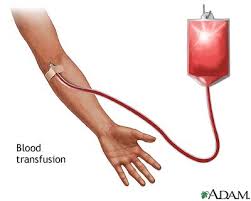
7. Penderma atau menerima pemindahan darah

8. Oksigen dan gas bius

9. Semua jenis bahan yang boleh menyerap ke dalam badan melalui kulit seperti krim, jelly atau plaster berubat

10. Mengambil sampel darah untuk ujian makmal

11. Sesalur dan bahan perantara untuk arteriography (pemeriksaan x-ray khas jantung) atau organ lain. [contoh: Angiography, contrast for imaging]

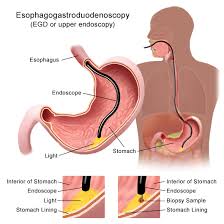
12. Teropong dalam rongga perut (endoskopi) untuk mencari punca penyakit.

13. Membasuh mulut, berkumur atau semburan mulut, dengan syarat tiada bahan masuk ke dalam perut. [contoh: Ear Nose Throat examination]

14. Teropong ke dalam salur peranakan atau memasukkan alat kedalamnya, (contoh: Intra Uterine Contraceptive Device)

15. Mengambil tisu (biopsi) hati atau organ lain.

Sementara iu majoriti peserta (terdapat minoriti yang tidak bersetuju ) menambah perkara berikut TIDAK MEMBATALKAN PUASA [No 16 sehingga 20]

16. Ubat titis hidung, semburan hidung dan ubat sedut

- Bagi penyakit asma atau lelah, amalan penggunaan inhaler tidak membatalkan puasanya kerana yang disedut itu ialah gas dan untuk tujuan perubatan. Ini adalah fatwa kebanyakan ulama masakini seperti Sheikh Ben Baz dan merupakan pendapat majoriti ulama yang bersidang di Seminar Feqh Perubatan ke 9.

- Keharusan penggunaan inhaler bagi pesakit asma juga harus berdasarkan fatwa umum dalam masalah ini oleh Syeikhul Islam Ibn Taymiyah. Keharusan ini meliputi teknik perubatan yang tidak menggunakan makanan atau minuman. Jika dari jenis debu maka diharuskan.

- Imam Ibn Hazm al-Andalusi (Kitab al-Muhalla) juga berpendapat tidak batal puasa dalam urusan perubatan termasuk suntikan atau menghirup serbuk.

17. Suntikan ke dalam dubur, teropong dan pemeriksaan digital ke dalam dubur.

18. Pembedahan yang melibatkan bius sepenuhnya jika pesakit mengambil keputusan untuk berpuasa

20. Penggunaan teropong perut, dengan syarat tidak memasukkan apa-apa bahan cecair atau bahan seumpamanya ke dalam perut [tidak pasti: saline for washout]

*************************************************************************************

Rabu, 10 Jun 2009

Keguguran: Perlukah Janin Diurus Seperti Mayat Biasa?

Assalamualaikum.

Seorang doktor seringkali dihujani dengan pertanyaan berkaitan hukum-hakam dalam Islam yang melibatkan permasalahan kesihatan atau perubatan. Ini bermakna, seorang doktor Islam amat perlu belajar dan terus belajar berkaitan bidang fiqh perubatan. Malangnya, pembelajaran sedemikian tidak mungkin diperolehi dalam silibus universiti kerana sistem yang digunakan adalah sistem sekular (mungkin tidak untuk mereka yang mengambil kursus perubatan di Timur Tengah).

Lantaran itulah kita sendiri perlu berusaha ke arah itu. Masyarakat amat mengharapkan pemahaman dari kita, profesional perubatan, secara langsung. Samaada kita belajar atau kita sendiri tahu ke mana hendak dirujuk apabila pertanyaan-pertanyaan sedemikian diajukan. Jangan menganggap remeh persoalan dari pesakit berkaitan hukum kerana dikhuatiri jawapan yang kita berikan atas dasar remeh-temeh tadi memberikan kesan terhadap hukum caca-merba yang kita 'fatwa'kan. Wal'iyazubillah.

Antara persoalan yang pernah diajukan kepada Ummi :

Keguguran: Perlukah janin diurus seperti mayat biasa?

Petikan dari arkib SJ al-ahkam.net :

Alhamdulillah, inilah jawapannya.

Dr Yusof al-Qaradhawi ditanya mengenai hal janin yang gugur.

Pertanyaan: Apakah bayi yang gugur wajib dishalati?

Jawaban: Bayi yang gugur tidak perlu dishalati kecuali jika ia
lahir dalam keadaan hidup, meskipun hanya beberapa menit.

Wallahu a'lam

Sumber: http://www.al-ahkam.net/home/index.php?name=MDForum&file=viewtopic&t=28218

Petikan dari laman web MUIS (Majlis Ugama Islam Singapura) yang disediakan oleh Ustaz Nor Razak Bakar, Pegawai Dakwah, MUIS :

Keguguran janin: Apa yang perlu dilakukan?

Kandungan yang belum sempurna atau keguguran ketika hamil memang ada berlaku. Keguguran itu kadang-kadang berlaku ketika kandungan itu berusia sebulan atau tiga bulan atau lima atau tujuh bulan. Janin yang gugur pula itu kadang-kadang telah sempurna tubuh anggotanya dan ada pula yang separuh sempurna.

Dalam keadaan begini, Islam telah memberi panduan cara mengurus dan menyempurnakan janin tersebut. Jika janin yang gugur itu terdapat padanya tanda-tanda bernyawa seperti bergerak ia dan bersuara ia, maka keguguran itu hendaklah disempurnakan seperti lazimnya menyempurnakan mayat orang dewasa. Bererti keguguran itu mesti dimandikan, dikafankan, disembahyangkan dan dikebumikan. Jika tidak terdapat tanda bernyawa tetapi mempunyai bentuk manusia seperti kelihatan telinganya atau jari-jarinya atau apa jua anggota badannya, maka keguguran itu hanya dimandikan, dikafankan dan dikebumikan tanpa perlu disembahyangkan.

Jika tidak terdapat langsung apa-apa tanda sama ada bernyawa atau bentuknya, maka keguguran itu tidak wajib disempurnakan seperti lazimnya. Tetapi adalah digalakkan dan sunat hukumnya keguguran itu dibungkus dan kemudiannya ditanam sahaja.

Sumber: http://www.muis.gov.sg/webpub/warita/warita9-97/panduan-a.html

*************************************************************************************

Khamis, 4 September 2008

Siri 7 : "Doktor, Batal Tak Puasa Saya Kalau..."

Assalamualaikum.

Fuh! Semenjak dua menjak ni, bertubi-tubi ummi diserang soalan dari pesakit berkisar hukum haid di bulan Ramadhan dan teramatlah ramainya yang datang disebabkan masalah haid yang berpanjangan. Kadang-kadang heran juga ummi. Time bukan bulan Ramadhan, tak de le sangat yang datang mengadu risau dengan haid yang panjang ni. Tapi bila tiba je Ramadhan, punya le dia orang risau. Agak-agak le, tahu tak kenapa? Hahhhh..betul tu! Pasal tak nak ganti pose punya pasal le. Itu pasal tak pasal-pasal jadi pasal! Banyak pulak pasalnya! He,he...Kalau tak time Ramadhan, agaknya seronok pulak 'cuti panjang-panjang' ya? Astaghfirullahal'azim. Tapi tulah selalunya trend pesakit yang datang ke klinik.

Hmm..dah tu nak kena jawab bab hukum-hakam pulak. Aduhaiii..bab-bab hukum ni, ummi bukannya dari golongan yang tahu, ummi cuma dari golongan yang mahu mengambil tahu (ambik kata-kata saifulislam.com) Walau apapun, InsyaAllah ummi tetap akan berusaha merungkaikan masalah pesakit yang datang berdasarkan sedikit ilmu yang ada. Kalau diluar pengetahuan ummi, maka sama-samalah kita merujuk kepada orang yang lebih tahu.

Dah agak lama juga berenti sat dari isu persoalan hukum di bulan puasa ni, teringin pulak ummi nak copy n paste beberapa permasalahan yang selalu diajukan pada ummi oleh pesakit. Kali ni dalam bahasa melayu dari sumber al-ahkam.net. Selamat menuntut ilmu...!

Soalan 1

Salam.

Bagi wanita yang tidak boleh berpuasa kerana haidh, adakah dia boleh makan/minum di siang hari atau perlu juga berpuasa sebagai menghormati bulan ramadhan?

Terima kasih.

Jawapan 1

والحمد لله والصلاة والسلام على رسول الله وعلى آله وصحبه ومن والاه أما بعد

Wanita haidh haram berpuasa, jika berpuasa tidak sah puasanya dan wajib diganti hari-hari yang ditinggalkannya.

Dalil tidak boleh berpuasa baginya:

Hadis Nabi SAW: "Apabila seorang wanita haidh, maka tidak bersolat dan tidak berpuasa". HR Bukhari 1/116.


Ibn Qudamah berkata: "Jika wanita haidh niat puasa, dan menahan diri dari makan minum, sedangkan dia tahu HARAM puasa, maka dia BERDOSA, dan puasanya tidak dikira". (ِAl-Mughni 4/391).


Cuma ada ulama berpendapat, bahawa golongan yang uzur hendaklah berbuka secara senyap-senyap. Tujuannya supaya mengelakkan daripada tohmahan orang bahawa dia melewa-lewakan hukum agama. Kerana mereka mungkin tidak mengetahui keuzuran golongan ini.


Ada juga ulama berpendapat, jika uzurnya zahir maka boleh berbuka secara zahir. Jika uzurnya tidak zahir, maka hendaklah berbuka secara tersembunyi. (Al-Insaf 7/348).


Wallahu A'lam

Soalan 2

Salam

Mase kecik2 dulu mak sy selalu ckp bhw prmpn yg haid x bole berbuka bersama dgn org yg berpuasa . Katanye dilarang. Jadi, mesti makan selepas org berbuke puase . Kemudian sy w/pun period ttp bersahur dan berpuasa seperti org yg berpuasa ttpi ade yg kata dilarang sebab ALLAH dah beri kelonggaran...Jadi x sepatutnye menolak nikmat makan di siang hari. Jadi , mohon penjelasan dr ahli panel yg dihormati.

Syukran

Jawapan 2

بسم الله والصلاة والسلام على رسول الله وبعد

HUKUM WANITA HAIDH BERPUASA

Wanita yg haidh;


- haram berpuasa.

- Jika berpuasa, tidak sah puasanya.

- wajib qadha' hari2 yg dia haidh.


Dalilnya:


Hadis: "Apabila seorang wanita haidh, maka tidak bersolat dan tidak berpuasa".
HR Bukhari 1/116.

Ibn Qudamah berkata: "Jika wanita haidh niat puasa, dan menahan diri dari makan minum, sedangkan dia tahu HARAM puasa, maka dia BERDOSA, dan puasanya tidak dikira". al-Mughni 4/391.


Syeikh Muhammad al-Syanqiti ditanya ttg masalah wanita haidh berpuasa, jawabnya: Jika dia tahu haramnya puasa, tetapi dilakukan juga, maka dia berdosa.


Hatta para ulama mengatakan: Jika wanita yg sedang puasa, tiba2 beberapa minit sebelum maghrib dia haidh, maka dia sudah dikira berbuka, dan wajib qadha hari itu.


rujukan: Syarah Zad Mustaqni' Syanqiti, dan syarah mumti' uthaimin.


Manakala anda bangun sahur pula, ia tidaklah dianggap makan sahur, kerana sahur hanya khas untuk org yg berpuasa. Jadi, ia dianggap makan sarapan sebelum subuh. Jangan menganggap ia makan sahur, kerana jika niat bersahur, bererti anda mahu berpuasa, sedangkan ia HARAM bagi wanita haidh.


Akhir kata, Berbuka puasa untuk wanita haidh ini bukannya rukhsah boleh atau tidak, TETAPI adalah azimah yg wajib diterima wanita Islam.


Soalan 3

Salam.

Minta bantuan para panel menerangkan permasalahan wanita istihadhah yang ingin berpuasa,sama ada puasa di bulan Ramadhan ataupun sekadar puasa sunat atau puasa ganti.

Harap dapat keterangan kerana dari carian sekadar penerangan sekitar permasalahan wanita istihadhah dan solat.


Terima kasih.

Jawapan 3

بسم الله والصلاة والسلام على رسول الله وبعد

Hukum wanita istihadhah adalah sama dengan hukum wanita suci dalam banyak permasalahan. Maka wanita istihadhah wajib sembahyang fardhu, wajib puasa ramadhan, boleh berpuasa sunat, dan boleh berpuasa ganti ketika waktu istihadhah itu.

Yang menghalang daripada puasa ialah: Haidh dan Nifas sahaja.
ini adalah pendapat semua keempat2 mazhab.

rujukan:

-Badai' Sanaie 1/161 (mazhab Hanafi)
-al-Talqin m/s 73 (mazhab Maliki)
-al-Majmuk 2/417 (Mazhab Syafie)

-Fatwa Lajnah Daemah no: 6495, m/s 5/404.

wallahu a'lam.

Soalan 4

Assalamualaikum....

Saya nak tanya ttg hukum puasa nih bagi wanita... contohnya seorang wanita telah berpuasa di bulan Ramadhan selama 5 hari selepas tu dia suci dan teruskan menunaikan puasanya...selama 4 hari .... keesokkanya haidnya didapati ada semula dan berlanjutan 3 hari.... bagaimana dia harus menggantikan puasanya itu...adakah dia harus ganti 8 hari sahaja atau 12 hari

Jawapan 4

Salam

Pertama sekali eloklah kiranya kita melihat berapa lamakah masa berlangsungnya darah haid. Terdapat khilaf dalam isu ini.

Berikut ringkasannya:


Syafi'iyyah: min 1 hari; maximum 15 hari


Imam Malik: tidak ditentukan dan tidak ada batasan.


Hanbali: min 1 hari; max 15 hari. walaupun begitu mereka mengatakan perlu juga dilihat pada adat dan kebiasaan masyarakat setempat mengenai kitaran haid


Dr Abdul Karim Zaidan dalam al-Mufashal fi-ahkamil mar'ah wal-bait al-muslimah(ensiklopedia hukum wanita & keluarga) berkata bahawa pendpt yg rajih ialah pendpt Hanbali iaitu perlu dilihat pada uruf utk menilai had haid perempuan.


Manakala mengenai berlakunya selang waktu suci antara had waktu haid spt yg dijelaskan di atas, ulama' juga berbeza pendpt mengenai hukum hari suci berkenaan.


Hanafiah berpendapat bahawa bersih drpd haid semasa tempoh haid dikira sebagai haid.


Adapun syafi'iyah berpdt hari bersih itu dikira hari haid dgn 3 syarat iaitu:

1. hendaklah hari bersih itu dilingkupi antara 2 darah haid.

2. hendaklah tempoh bersih itu tidak melepasi 15 hari.

3. Darah yg keluar tidak kurang dr tempoh sekurang2 haid.


Manakala Hanbali dan maliki berpdt bhw hari bersih itu dikira hari suci. Ini krn keluarnya darah itu menujukkan haid dan terhentinya darah menunjukkan suci dari haid.


Berbalik kpd persoalan sdr. Maka menurut penpdt mazhab syafi'i, puasa sdr tidak sah krn waktu suci antara dua haid itu tetap dikira tempoh haid. Maka hendaklah ia menggantikan 12 hari.
Adapun penpdt hanbali dan maliki, tidak perlu ia menggantikan puasa berdasrkan penjelasan ringkas di atas. WA.

Wassalam

Sumber Rujukan : Al-Ahkam.Net

Rujukan Lain

Fiqh Islami 1
Dr Wahbah al-Zuhailly

Hukum Dan Persoalan Darah2 Haid, Nifas Dan Istihadhah
Muhammad Nuruddin al-Makki

Lihat juga URL berikut

SJ-1818: Haid, Wuduk & Solat


*************************************************************************************

Ahad, 24 Ogos 2008

Siri 6 : "Doktor, Batal Tak Puasa Saya Kalau..."

Assalamualaikum.

Ada yang bertanya pada ummi, "Saya nak kena buat operation bulan puasa nanti, dr. Dah tentu kena inject ubat pelali. Camana ek? Batal ke tidak puasa saya nanti? Atau nak tangguhkan aja operation saya ni?"...

Soalan sebegini sememangnya sentiasa bermain-main di fikiran pesakit. Hai..kalau difikirkan bab takutnya puasa terbatal, agaknya semua perkara kita nak tangguhkan aja time pose ni, kan? Tapi benarkah suntikan pelali tu membatalkan puasa? Kalau benar, adakah semua jenis suntikan pelali membatalkan puasa? Suntikan pelali setempat (local anaesthesia) pun membatalkan puasa juga ke? Kalau gitu, tak bolehlah nak cabut gigi di siang hari bulan Ramadhan?

Jom kita teliti apa jawapan
Shaykh Ibn ‘Uthaymeen, Ibn Qudaamah dan Shaykh ‘Abd al-‘Azeez ibn Baaz terhadap permasalahan ini...

Does anaesthetic break the fast?

Praise be to Allaah.

Local Anaesthetic

Local anaesthetic does not break the fast, because it is not food or drink, and is not equivalent to them.

Shaykh Ibn ‘Uthaymeen (may Allaah have mercy on him) was asked: With regard to anaesthetic which is applied to a tooth during the day in Ramadaan – do I have to make up that day if I have this anaesthetic?

He replied: No, because anaesthesia does not break the fast. A local anaesthetic only affects the place where it is given, it does not reach the stomach. So if a person is given an anaesthetic when he is observing a naafil or obligatory fast, his fast is still valid. End quote from Fataawa Noor ‘ala ‘l-Darb.

See also: Fataawa al-Shaykh Ibn Baaz (15/259)

General Anaesthetic

But if it is a general anaesthetic that leads to unconsciousness that lasts all day, then the fast must be made up.

Ibn Qudaamah (may Allaah have mercy on him) said: If a person loses consciousness for the entire day and does not wake up for any part of it, then his fast is not valid. This is the view of our imam and of al-Shaafa’i.

Then he said: If the one who lost consciousness wakes up for part of the day, then his fast is valid, whether it was at the beginning or the end of the day. End quote from al-Mughni (3/12).

Based on this, if the fasting person is given an anaesthetic whilst fasting, then his fast is valid and it is not invalidated by that. But if he was given the anaesthetic before Fajr, and he remained asleep under the influence of the anaesthetic until the sun set, then his fast on that day is not valid.

Ruling on anaesthetic injections and cleaning, filling or extraction of teeth whilst fasting

If a person has pain in his tooth, then a Dentist cleans, fills or removes it, does it affect his fasting? Does an anesthetic injection invalidate fasting?

Praise be to Allaah.

The things mentioned in the question do not have any effect on the validity of the fast, rather they are forgiven, but he should be careful to avoid swallowing any medicine or blood. Similarly the injection mentioned does not have any effect on the validity of the fast, because it is not like food or drink, and the basic principle is that the fast remains valid. End quote.

Shaykh ‘Abd al-‘Azeez ibn Baaz (may Allaah have mercy on him)

Majmoo’ Fataawa wa Maqaalaat Mutanawwi’iah (15/259)

Sumber Rujukan : Sila Klik Di Sini

**************************************************************************************

Jumaat, 22 Ogos 2008

Siri 5 : "Doktor, Batal Tak Puasa Saya Kalau..."

Assalamualaikum.

Di kalangan pesakit ummi ada yang bertanya, “Dr, boleh tak kita ambik pil untuk halang haid di bulan Ramadhan nanti?” Hmm…walaupun dah tahu apa yang bakal dijawab, tetap ummi bertanya, “Kenapa tak nak kasi haid datang?” “Tak delah..mudah sikit dr, tak payah nak ganti ganti nanti…” Biasanya itulah jawapan yang ummi terima. Sebenarnya soalan sebegini sepatutnya ditujukan kepada orang yang ahli..maksud ummi ditujukan kpd ustaz atau ustazah sebab ia melibatkan soal hukum. Walaubagaimanapun mungkin disebabkan penglibatan kegunaan pil di situ, maka nak mudah cerita, doktor akan menjadi tempat rujukannya.

Untuk tidak menghampakan, di sini ummi petik 2 bentuk soalan yang di tanya kepada Shaykh Muhammad ibn ‘Uthaymeen berkaitan isu tersebut:

(1) Bolehkah seseorang wanita itu menghentikan haidnya di sepanjang Ramadhan dengan kaedah pengambilan pil?

(2) Bolehkah seseorang wanita itu mengampil pil untuk menghalang kedatangan haid pada 10 hari terakhir di bulan Ramadhan?

Stopping one’s period during Ramadaan

Some women take pills in Ramadaan to stop their periods. They do this so that they will not have to make up any fasts afterwards. Is this permissible and are there any restrictions on their doing this?

Praise be to Allaah.

I think that women should not do this and they should remain on the menstrual cycle that Allaah has decreed for them and for all the daughters of Adam. There is wisdom behind it and a reason for which Allaah created it, and this wisdom befits the nature of women. If a woman tries to stop this cycle, it will undoubtedly have a harmful effect on her body, and the Prophet (peace and blessings of Allaah be upon him) said: “There should be neither harming nor reciprocating harm.” This is besides the fact that these pills can do harm to the uterus as the doctors have stated. What I think with regard to this issue is that women should not use these pills. Praise be to Allaah for His decree and wisdom. When a woman’s period comes, she should stop fasting and praying, and when her period is over she should resume fasting and praying; when Ramadaan is over she should make up the fasts that she has missed.

Fataawa al-Shaykh Ibn ‘Uthaymeen

Taking pills to prevent period in the last ten days of Ramadaan

If a woman’s period is going to come in the last ten days of Ramadaan, is it permissible for her to use contraceptive pills so that she can continue to worship during these days of blessing?

Praise be to Allaah.

This question was put to Shaykh Muhammad ibn ‘Uthaymeen (may Allaah have mercy on him) and he said:

We do not think that she should use these pills to help her worship Allaah, because the period which happens to her is something which Allaah has decreed for the daughters of Adam.

The Prophet (peace and blessings of Allaah be upon him) entered upon ‘Aa’ishah when she was with him during the Farewell Pilgrimage. She had entered ihraam for ‘Umrah, then her period came before she reached Makkah. He entered upon her and found her weeping. He asked, “Why are you weeping?” and she told him that her period had come. He told her, “This is something which Allaah has decreed for the daughters of Adam.” So the period is not something which is under her control. If it comes during the last ten days of Ramadaan, then let her accept what Allaah has decreed for her and not use these pills. I have heard from trustworthy doctors that these pills cause harm to the uterus and the blood, and they may cause deformity in the foetus if she should conceive. Hence we think that she should avoid them. If her period comes and she cannot pray or fast, this is beyond her control and is the decree of Allaah.

Shaykh Muhammad ibn ‘Uthaymeen (may Allaah have mercy on him)
Sumber Rujukan : Sila Klik Di Sini

***************************************************************************************

Selasa, 19 Ogos 2008

Siri 4 : "Doktor, Batal Tak Puasa Saya Kalau..."

Assalamualaikum.

Kini tiba giliran untuk masalah pompuan (orang perempuan le tu)...uishh...masalah pompuan ni teramatlah banyaknya. Apa tidaknya...lelaki tak de haid, pompuan ada haid, lelaki tak ngandung, pompuan yang ngandung, lelaki tak beranak, pompuan juga yang beranak. Kalau dah gitu banyaklah hukum feqah yang perlu diketahui oleh pompuan, kan?

Tapi jangan ingat pompuan je yang kena belajar bab-bab hukum ni, lelakipun wajib belajar! Bukankah lelaki itu pemimpin kepada kaum wanita..kalau tak tau bab-bab hukum, camana nak ajar isteri kita, camana nak ajar kat anak-anak perempuan kita nanti...betul tak?

Ok..hari ni ummi nak bincang masalah wanita dengan aduan dan pertanyaan berikut:

1. Berlaku pendarahan semasa mengandung, puasa batal tak?
2. Keluar air ketuban tak batal puasa ke?
3. Boleh ke diteruskan puasa semasa mengandung atau menyusu dalam keadaan terlampau letih atau sakit?
4. Perlu puasa ke kalau dah kering darah nifas sebelum 40 hari?
5. Kalau darah masih belum kering selepas habis tempoh nifas, boleh ke berpuasa?
6. Tak batal ke puasa bila menyusu anak?

Selamat Menuntut Ilmu...

She is pregnant and started bleeding – should she break her fast?

I am pregnant and I started bleeding during the day in Ramadaan. I went to the doctor and she did an internal exam and gave me an injection to stabilize the pregnancy. She also took a blood sample from me. Is my fast still valid? Or is it invalidated by any of these things?

Praise be to Allaah.

The things mentioned – the internal exam, the injection to stabilize the pregnancy and giving a blood sample, do not break the fast, because they are not things that are known to break the fast, nor are they similar to those things.

With regard to bleeding, the scholars differed as to whether a pregnant woman who bleeds is regarded as menstruating or not.

In the answer to question no. 23400 we stated that she is regarded as menstruating if that continues to occur at the usual time of her menses, at the usual time of the month and for the usual number of days.

But if that happens at a time other than her usual time of menses, or if her periods stopped for a month then she began to bleed in the second month, then it is not regarded as menses, so it does not affect the fast and your fast is valid in sha Allah.

And Allaah knows best.

Amniotic fluid leaking during Ramadaan

There is a woman who was in her ninth month of pregnancy when Ramadaan came, and at the beginning of the month she was leaking water (i.e., amniotic fluid), but not blood. She was fasting whilst that water was leaking. This happened ten years ago. My question is: does this woman have to make up the fast, noting that she fasted on those days when this water was leaking?

Praise be to Allaah.

If the situation was as you described, then her fast is valid and she does not have to make it up.

Fatwa of the Standing Committee, from the book Fataawa al-Jaami’ah, vol. 1, p. 355.

It is better for pregnant and breastfeeding women not to fast if it is too hard for them to fast

Is it better for a pregnant woman not to fast or is it better for her to fast and put up with the hardship?

Praise be to Allaah.

Firstly:

Whoever studies the rulings on fasting will find that Allaah has prescribed it as something to be done in an easy manner, and that taking an easy attitude towards it is something that is beloved to Allaah. Hence Allaah says in the verses on fasting (interpretation of the meaning):

“Allaah intends for you ease, and He does not want to make things difficult for you”
[al-Baqarah 2:185]

If the hardship of fasting reaches such a level that there is the fear of harm, then it is haraam to fast in that case.

Hence the Prophet (peace and blessings of Allaah be upon him) said concerning a traveller who fasted even though it was so difficult: “It is not righteousness to fast when travelling.” Narrated by al-Bukhaari, 1946; Muslim, 1115. And he said when some of the Sahaabah fasted on a journey although it was very difficult: “Those are the disobedient ones, those are the disobedient ones.” Narrated by Muslim, 1114.

Al-Nawawi said: This is understood to refer to those who were harmed by fasting. End quote.

It was narrated that ‘Aa’ishah (may Allaah be pleased with her) said: “The Messenger of Allaah (peace and blessings of Allaah be upon him) was never given the choice between two things but he would choose the easier of the two unless it was a sin; if it was a sin, he would keep the farthest away from it of all people.” Narrated by al-Bukhaari, 3560; Muslim, 2327.

Al-Nawawi (may Allaah have mercy on him) said: This indicates that it is mustahabb to choose the easier option so long as it is not haraam or makrooh. End quote.

Ahmad (5832) narrated that Ibn ‘Umar (may Allaah be pleased with him) said: The Messenger of Allaah (peace and blessings of Allaah be upon him) said: “Allaah loves to see His concessions accepted as He hates to be disobeyed.” Classed as saheeh by al-Albaani in Irwa’ al-Ghaleel, 564.

This evidence indicates that the easier an act of worship is on a person, the closer it is to the aims of sharee’ah.

Secondly:

The scholars stated that it is better for a sick person for whom fasting is difficult not to fast.

Al-Qurtubi (2/276) said: It is mustahabb for him not to fast and no one fasts (in such a case) but one who is ignorant. End quote.

Ibn Qudaamah (may Allaah have mercy on him) said in al-Mughni (4/404): Fasting is makrooh for a sick person for whom fasting is difficult.

Shaykh Ibn ‘Uthaymeen (may Allaah have mercy on him) said in al-Sharh al-Mumti’ (6/356): Thus we can see the mistake of some of those who try hard despite being sick, for whom fasting is difficult or may harm them, but they refuse to break their fast. We say: They are erring by not accepting the kindness of Allaah and the concession He has granted, and by harming themselves.

Allaah says (interpretation of the meaning):
“And do not kill yourselves”
[al-Nisa’ 4:29]

end quote.

Thus it is clear that if fasting is too difficult for pregnant and breastfeeding women, it is better for them not to fast. In fact the scholars have clearly stated that it is haraam for them to fast if fasting will harm the foetus or child.

Al-Jassaas said in Ahkaam al-Qur’aan (1/252): Either pregnant and breastfeeding women will themselves be harmed by fasting or their children will be harmed. In either case, not fasting is better for them and fasting is not allowed in their case. If fasting will not harm them or their children, then they have to fast and it is not permissible for them to break the fast.

He also said (1/307): Those who are sick, and women who are pregnant or breastfeeding, and every one who fears that he or his child may be harmed by fasting, should not fast, because it is possible that the harm and hardship of fasting is a kind of difficulty. Allaah has stated in the Qur’aan that He does not want to cause any difficulties to us. This is akin to the report that when the Prophet (peace and blessings of Allaah be upon him) was given the choice between two things, he would always choose the easier of the two.

Ibn Muflih said in al-Furoo’ (3/35): It is makrooh for pregnant and breastfeeding women to fast if there is the fear that they or their children may be harmed.

Ibn ‘Aqeel said that if a pregnant or breastfeeding woman fears for the pregnancy or the nursing infant, it is not permissible to fast, and she must offer the fidyah. If there is no such fear then it is not permissible for her not to fast.

Shaykh Ibn Baaz (may Allaah have mercy on him) said: The ruling on pregnant and breastfeeding women is the same as that on those who are sick; if it is difficult for them to fast, then it is prescribed for them not to fast.

Tuhfat al-Ikhwaan bi Ajwabah Muhimmah bi Arkaan al-Islam, p. 171

And Allaah knows best.

If a woman’s nifaas ends before forty days, she should do ghusl and pray and fast

My wife gave birth around the 15th of Sha’baan. Is it permissible for her to pray, fast, do ‘umrah, read Qur’aan and do all other duties prescribed in Islam when the nifaas (post-partum bleeding) stops and she is sure of that, or should she wait for 40 days as some people say?

Praise be to Allaah.

The majority of scholars, including the four imams, are of the view that there is no minimum limit for nifaas. Whenever a woman becomes pure from nifaas, she has to do ghusl and pray and fast, even if that is before forty days have passed since the birth. Because no precise definition has been narrated in sharee’ah with regard to the minimum length of nifaas, so the matter should be based on experience, which shows that nifaas may be very short or it may be long. - Ibn Qudaamah in al-Mughni, 1/428.

Some of the scholars narrated that there was consensus on this point. Al-Tirmidhi (may Allaah have mercy on him) said: The scholars among the companions of the Prophet (peace and blessings of Allaah be upon him), the Taabi’een and those who came after them are agreed that a woman in nifaas should stop praying for forty days, unless she sees that she has become pure before that, in which case she should do ghusl and pray.
See al-Majmoo’ by al-Nawawi, 2/541.

Shaykh Ibn Baaz (15/195) was asked: is it permissible for a woman in nifaas to pray, fast and do Hajj before forty days if she becomes pure (i.e, if the bleeding stops)?

He replied: yes it is permissible for her to fast, pray and do Hajj and ‘umrah, and it is permissible for her husband to have intercourse with her within forty days, if she becomes pure. If she becomes pure after twenty days, she should do ghusl and pray and fast, and she is permissible for her husband. The report from ‘Uthmaan ibn Abi’l-Aas which says that he regarded that as makrooh is to be understood as meaning disliked but not forbidden; this is his ijtihaad, but there is no evidence for that.

The correct view is that there is nothing wrong with that if the woman becomes pure before forty days. If the bleeding resumes within forty days, then the correct view is that she should regard it as nifaas within the forty-day period, but her fasts, prayers and Hajj at the time when she was pure are still valid and she does not have to repeat any of them, so long as they were done when she was pure.

It says in Fataawa al-Lajnah al-Daa’imah (5/458): If a woman in nifaas sees that she has become pure before forty days are over, then she should do ghusl and pray and fast, and her husband may have intercourse with her.

The Standing Committee (10/155) was asked about a woman who gave birth seven days before Ramadaan, then she became pure and fasted Ramadaan. They replied: If the matter is as described and she fasted Ramadaan at a time when she was pure, then her fast is valid and she does not have to make it up.

A woman has been bleeding after childbirth for 40 days and it has not yet stopped. Should she fast and pray?

Does a woman who recently gave birth have to fast Ramadaan, knowing that forty days have passed and she is still in nifaas i.e., she has not become taahir (pure) yet (the bleeding has not stopped).

Praise be to Allaah.

The scholars differed as to the maximum extent of nifaas (bleeding following childbirth). The majority of scholars were of the view that it is forty days after giving birth. See question no. 10488.

Based on this, then for a woman whose bleeding lasts for more than forty days, if this blood coincides with her regular menstrual cycle, then she is menstruating; if it does not coincide with her regular menstrual cycle, then it is the blood of istihaadah (irregular non-menstrual bleeding), so she should do ghusl after forty days, and fast and pray. She is taahir (pure) and comes under the same ruling as other women who are taahir.

Fasting whilst breastfeeding is valid

Does breast feeding my newborn break my fast? In other words, if I am breast feed my baby during the time we are fasting, does my fast get broken?

Praise be to Allaah.

Breastfeeding is not one of the things that invalidate the fast. The fuqaha’ are agreed that a woman who is breastfeeding is permitted to fast.

And Allaah knows best.

Sumber Rujukan : Sila Klik Di Sini

**************************************************************************************

Isnin, 18 Ogos 2008

Siri 3 : "Doktor, Batal Tak Puasa Saya Kalau..."

Assalamualaikum.

Apakata hari ni kita bincang masalah berkaitan suntikan atau injection di bulan Ramadhan? Pengalaman ummi, ramai pesakit yang refuse atau tak setuju disuntik di siang hari bulan Ramadhan kerana bimbang puasanya terbatal. Kalau setakat injection yang boleh ditangguhkan ke malam, oklah juga tapi macamana pulak kalau injection tu, injection 'wajib'...contohnya macam suntikan insulin untuk rawatan kencing manis...

Maka sayugialah kiranya kita memetik ilmu daripada orang yang lebih tahu...Ok, di bawah ni ummi copy & paste fatwa-fatwa yang dikeluarkan untuk permasalahan tadi..selamat menuntut ilmu!

Fasting person having an injection

What is the ruling on taking medication by injection during the day in Ramadan, whether it is for nourishment or for medical purposes?

Praise be to Allaah.

It is permissible for a fasting person to take medicine by injection, whether intramuscular or intravenous, during the day in Ramadaan, but it is not permissible for the fasting person to be given an injection for nourishment purposes during the day in Ramadaan, because that comes under the ruling on eating and drinking; having this injection is regarded as a trick aimed at breaking one's fast in Ramadaan. If the intramuscular or intravenous injection can be given at night, that is better.

And Allaah is the Source of strength. May Allaah send blessings and peace upon our Prophet Muhammad and his family and companions.

Standing Committee for Academic Research and Issuing Fatwas, 10/252

He needs to have an injection into a vein – will that affect his fast?

One of my friends has been stricken with the onset of cancer and has to take a course of treatment in Ramadaan, consisting of a number of medicines dissolved in liquids which are to be administered intravenously. Is his fasting valid?

Praise be to Allaah.

Two scenarios may apply to having injections during the day in Ramadaan:

1 – Where the injection provides nourishment that takes the place of food and drink; this kind of injection invalidates the fast because it is like eating and drinking.
2 – Where what is injected is not a kind of nourishment; this does not break the fast or affect it. In this case it makes no difference whether the injection is into a vein or a muscle.

But if it is possible to have these injections at night, that is better and more on the safe side with regard to the fast.

Shaykh Ibn Baaz (15/257) was asked about the ruling on a person who had intravenous and intramuscular injections during the day in Ramadaan when he was fasting and completed his fast – was his fast invalidated and does he have to make it up, or not?

He replied:

His fast is valid, because an injection into a vein is not like eating or drinking; this applies more so in the case on an intramuscular injection. But if he makes it up in order to be on the safe side, that is better. If it can be delayed until nighttime, if he needs to have it, that is better too, so as to avoid an area of scholarly dispute.

Shaykh Ibn ‘Uthaymeen was asked in Fataawa al-Siyaam (p. 220) about the ruling on having injections into a vein, muscle or the buttock.

He replied:

There is nothing wrong with having injections into a vein, muscle or buttock, and that does not break the fast, because this is not one of the things that break the fast; it is not food or drink, and it is not like eating or drinking. We have already explained that this does not have any effect on the fast. What does affect the fast is when a sick person is given an injection of something that takes the place of food and drink.

The Standing Committee (10/252) was asked about the ruling on administering medicine via injection during the day in Ramadaan, whether that is nourishment or medication.

They replied:

It is permissible to administer medicine by needle into a muscle or vein to a fasting person during the day in Ramadaan, but it is not permissible for the fasting person to be given a nourishing injection during the day in Ramadaan, because that comes under the ruling on eating or drinking, so that injection is regarded as a means of breaking the fast in Ramadaan. If the injection can be given into a muscle or vein at night, that is better.

He was told that having an injection breaks the fast so he broke his fast and made it up later on. What should he do?

Fate dictated that I should get pulmonary tuberculosis, and the treatment involved having a needle every day for a year, as well as other medications three times each day. The treatment coincided with the beginning of Ramadaan, but despite that I began to fast the holy month. After 15 days of fasting, I went to take the injection as usual at the health centre, and there the nurse asked me if I was fasting, and I said yes. His response what that I should stop fasting from that day onwards, so following his instructions I stopped fasting for the rest of Ramadan, and after that I made up the days that I did not fast. After I found out that injections do not invalidate the fast, I regretted it and felt that I had committed a great sin, even though my intention was clearly to fast the whole month despite my sickness. I blame that nurse who told me not to fast for the rest of the month. I hope that you can advise me about the Islamic ruling concerning this.

Praise be to Allaah.

Firstly:

Injections that are given to sick people are of two types:
1- Those which contain nourishment. These cause the fast to be invalidated if one uses them deliberately.
2- Those which do not contain nourishment. These do not affect the fast, whether they are given via a vein (intravenous) or a muscle (intramuscular), according to the more correct of the two scholarly opinions, because they are neither food not drink, nor do they take the place of food or drink.

See question no. 49706 and 65632. in which we quote some of the fatwas of the scholars concerning this issue.

Perhaps this nurse was following the view of those who say that injections break the fast if they reach the stomach. Whatever the case, the fact that you broke the fast based on his instructions, then made up the fasts that you missed, means that you have done what was required of you, and you do not have to do anything else.

Shaykh Ibn ‘Uthaymeen (may Allaah have mercy on him) was asked about a woman who dyed her hair then her sister told her that that invalidates the fast, so she broke her fast then made it up. He replied: The answer to this question involves two things, the first of which is this woman who issued a fatwa without knowledge, because if a woman who is fasting dyes her hair, it does not invalidate the fast. The second issue has to do with this woman who received information that was not based on proper knowledge and broke her fast then made it up based on that fatwa. She does not have to do anything now, because she has done what was required of her. End quote from Majmoo’ Fataawa al-Shaykh Ibn ‘Uthaymeen (19/226).

Secondly:

In your question you say: “Fate dictated that…” This is a common mistake, because fate has no will. The correct thing to say is: Allaah willed, or Allaah decreed.

Shaykh Ibn ‘Uthaymeen (may Allaah have mercy on him) was asked about saying “Circumstances dictated that such and such should happen” or “fate willed that such and such should happen.”

He replied: Saying “fate decreed” or “circumstances decreed” is wrong, because circumstances refers to time, and time has no will. Similarly fate has no will either. Rather the One Who decrees is Allaah, may He be glorified and exalted. If a person says “The will of Allaah dictated that such and such should happen,” there is nothing wrong with that, because will cannot be attributed to fate. End quote from Majmoo’ Fataawa Ibn ‘Uthaymeen (3/113).

We ask Allaah to heal you and give you good health, and to increase you in understanding and knowledge.

And Allaah knows best.

Does having an anaesthetic via injection during Ramadaan break the fast?

I am going to have two non-invasive medical procedures during the month of Ramadaan, and I am going to take a drug via injection during these two procedures. Will my fast be invalidated by that?

Praise be to Allaah.

Being given medicine via injection does not break the fast, whether it is intramuscular or intravenous, so long as the injected substance does not provide nutrition, because in that case it is like food and drink which are forbidden to the one who is fasting.

It says in Fataawa al-Lajnah al-Daa’imah (10/252):

It is permissible to be given medicine via injection into the muscles or veins when fasting during the day in Ramadaan. But it is not permissible for the fasting person to be given nutrients during the day in Ramadaan, because that comes under the same rulings as consuming food and drink, and this injection is regarded as a means of breaking the fast in Ramadaan. If it is possible to give the injection into a muscle or vein during the night, that is preferable. End quote.

Shaykh Ibn ‘Uthaymeen (may Allaah have mercy on him) was asked about the spread of anaesthesia through the body – does that break the fast? And what about the flow of blood when a tooth is extracted?

He replied:

Neither of these breaks the fast, but the blood that flows after removal of a tooth should not be swallowed. End quote.

Fataawa Ramadaan, p. 525

It makes no difference whether it is a local or general anaesthetic. Many of the fuqaha’ have stated that if a person who is unconscious is awake for even a moment of the day, his fast is valid, so long as he formed the intention to fast from the night before.

Imaam al-Shaafa’i said in al-Umm (8/153):

If a man loses consciousness for a day or two days during the month of Ramadaan, and he did not eat or drink anything, then he has to make up those days. But if he was awake for part of the day, then he is regarded as having fasted on that day. End quote.

Ibn Qudaamah said in al-Mughni (4/343):

If he was unconscious for the whole day and did not wake up at all, then his fast is not valid, according to the view of our imam (i.e., Imam Ahmad) and al-Shaafa’i…
If the person who was unconscious woke up for a part of the day, his fast is valid, whether that was at the beginning or the end of the day. End quote.

Vaccinations against meningitis do not invalidate the fast

Does a vaccination against meningitis invalidate the fast?

Vaccinations against meningitis do not invalidate the fast. There is nothing wrong with that, but if it is possible to give the injection at night, that is more on the safe side. And Allaah is the Source of strength. May Allaah send blessings and peace upon our Prophet Muhammad and upon his family and companions.

Standing Committee for Academic Research and Issuing Fatwas, 10/251

Ruling on having an inoculation for hepatitis during the day in Ramadaan

What is the ruling on having an inoculation for hepatitis in the right shoulder during the day in Ramadaan?

Praise be to Allaah.

That does not do any harm or affect the fast, because this inoculation is not like giving nourishment.

And Allah knows best.

Sumber Rujukan : Sila Klik Di Sini

*****************************************************************************************************

Ahad, 17 Ogos 2008

Siri 2 : "Doktor, Batal Tak Puasa Saya Kalau..."

Assalamualaikum.

Hari ni ummi nak selesaikan pertanyaan ni pulak ; "Dr, batal tak puasa saya kalau saya..."

1. Taruk ubat titik ke dalam hidung/mata/telinga
2. Guna spray hidung
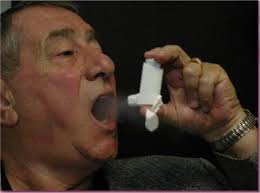
3. Guna puffer/inhaler untuk masalah asthma (lelah)

dan ummi tambah juga permasalahan merokok kat sini sebab ada yang cuba samakan konsep asap rokok dengan asap daripada puffer/inhaler...Selamat membaca, semoga bermanfaat hendaknya!

Kalau nak tahu pasal batal ke tidak puasa sekiranya...

1. Guna ubat sumbat (suppository)
2. Guna enema
3. Hidung berdarah ketika puasa

sila rujuk Siri 1 di sini...

Ruling on nose drops for one who is fasting

What is the ruling on using nose drops during the day in Ramadaan?

Praise be to Allaah.

It is proven that the Messenger of Allaah (peace and blessings of Allaah be upon him) said: “Snuff water up into the nose deeply, unless you are fasting.” Narrated by al-Tirmidhi (788) and classed as saheeh by al-Albaani in Irwa’al-Ghaleel (935).

This hadeeth indicates that it is not permissible for the fasting person to let water reach his throat via the nose.

Based on that, if the nose drops are small in amount such that they will not reach the throat, then there is nothing wrong with that, but if they do reach the throat and can be tasted, then the fast is invalidated and has to be made up.

Shaykh Ibn Baaz said: The same applies to eye drops and ear drops. They do not break the fast according to the more correct of the two scholarly opinions, but if he finds the taste of the drops in his throat, he should make up the fast in order to be on the safe side, but it is not obligatory, because these are not openings through which food and drink enter the body. But nose drops are not permissible, because the nose is an opening through which food and drink may enter the body. Hence the Prophet (peace and blessings of Allaah be upon him) said: “Snuff water up into the nose deeply, unless you are fasting.” The one who does that has to make up the fast because of this hadeeth and similar reports, if he finds the taste of that in his throat. End quote.

Shaykh Ibn ‘Uthaymeen said in Fataawa Ramadaan (p. 511): If nose drops reach the stomach or the throat, then they break the fast, because the Prophet (peace and blessings of Allaah be upon him) said, according to the hadeeth of Laqeet ibn Sabrah: “Snuff water up into the nose deeply, unless you are fasting.” So it is not permissible for the fasting person to put drops in his nose that can reach his stomach or his throat, but as for nose drops that will not reach them, they do not break the fast.

With regard to eye drops – and also using kohl – and ear drops, they do not break the fast of the fasting person. End quote.

Based on this, the fasting person should not use nose drops unless it is too difficult for him to go without them, in which case he should use them but he should be careful not to let any of that reach his throat. If he swallows any of that he should make up that day.

If he knows that he cannot help swallowing some of them, then it is not permissible for him to use them unless his sickness is so bad that it is permissible for him not to fast, which is if fasting will cause him harm or unbearable hardship.

And Allaah knows best.

Ruling on eye drops for one who is fasting

If the bitter taste of eye drops enters the throat, does it break the fast? If you put the eye drops in during the day and then go to sleep, and do not know whether you swallowed it, what is the ruling?

Praise be to Allaah.

The scholars differed concerning eye drops and whether or not they break the fast.
The view favoured by Shaykh al-Islam Ibn Taymiyah and by Shaykh Ibn ‘Uthaymeen, is that they do not break the fast.

Shaykh Ibn ‘Uthaymeen said:

Shaykh al-Islam Ibn Taymiyah was of the view that kohl does not break the fast, not even if the taste of the kohl reaches the throat. He said, this is not called food or drink, and it is not like food or drink, and it does not have the same effect as food or drink. There is no saheeh hadeeth from the Prophet (peace and blessings of Allaah be upon him) which expressly indicates that kohl breaks the fast, and the basic principle is that it does not break the fast. An act of worship remains valid unless it is proven that it is invalidated. What he said is correct, even if a person can taste it in his throat. Based on the view favoured by Shaykh al-Islam, if a person puts drops in his eyes whilst fasting and tastes it in his throat, that does not break his fast.
Al-Sharh al-Mumti’, 6/382.

Ruling on using nasal sprays when fasting

What is the ruling on using nasal sprays – does that affect the fast?

Praise be to Allaah.

There is nothing wrong with doing that in cases of necessity, but if it can be delayed until night time, that is more on the safe side. End quote.

Shaykh ‘Abd al-‘Azeez ibn Baaz (may Allaah have mercy on him)

Majmoo’ Fataawa wa Maqaalaat Mutanawwi’ah (15/264).

Using a puffer for asthma does not invalidate the fast

Does using a puffer for asthma in the mouth during the day in Ramadaan invalidate the fast for one who is suffering difficulty in breathing?

Praise be to Allaah.

Using a puffer for asthma during the day in Ramadaan does not invalidate the fast.
The puffer used for asthma does not invalidate the fast because it is a pressurized gas that goes to the lungs, and is not food, and it is something that is always needed, in Ramadaan and at other times.

Fataawa al-Da’wah, Ibn Baaz, no. 979.

See the booklet Sab’oon Mas’alah fi’l-Siyaam (Seventy issues related to fasting).

Shaykh Ibn ‘Uthaymeen said:

This puffer evaporates and does not reach the stomach, so in this case we say that there is nothing wrong with using this puffer when you are fasting, and you do not break your fast by doing that.

Fataawa Arkaan al-Islam, p. 475

The scholars of the Standing Committee said:

The asthma medication that the patient uses by inhaling it reaches the lungs via the trachea and does not reach the stomach, so it is not food or drink or anything of the sort… So it seems that the fast is not broken by using this medicine.

Fataawa Islamiyyah, 1/130

And Allaah knows best.

Smoking is haraam and invalidates the fast

Some people say that fasting is not invalidated by smoking; because it is not food or drink. What is your opinion about this?

Praise be to Allaah.

I think that this is a view for which there is no basis. Rather smoking is a kind of drinking; in Arabic they say that one “drinks” a cigarette. Moreover, there is no doubt that it reaches the stomach and the inside of the body, and everything that reaches the stomach and the inside of the body invalidates the fast, whether it is beneficial or harmful, even if a person were to swallow a bead from the masbahah, or a piece of iron, or anything else, it invalidates the fast. So it is not essential that the thing that invalidates the fast, or that is eaten or drunk, should be nourishing or beneficial. Everything that reaches the stomach is regarded as food or drink. They believe – indeed they know – that this is a kind of drink, and if anyone says this then he is being arrogant.

Moreover, I think that the month of Ramadaan is an opportunity for the one who is sincerely resolved and wants to give up this foul, harmful habit of smoking. I think that it is an opportunity because he is going to abstain from it throughout the day in Ramadaan, and at night he can distract himself from it by means of the food and drink that Allaah has permitted to him, and by frequenting the mosques and attending gatherings of righteous people, and he can keep away from those who have this habit. If he abstains from it throughout the month, then that will be a great help to him in giving it up for the rest of his life. This is an opportunity which smokers should not miss. End quote.

Majmoo’ Fataawa Ibn ‘Uthaymeen, Fataawa al-Siyaam (203. 204).

Sumber Rujukan : Sila Klik Di Sini


**************************************************************************************